5 Truths: Is Muesli Good For Weight Loss Or A Secret Sugar Trap?
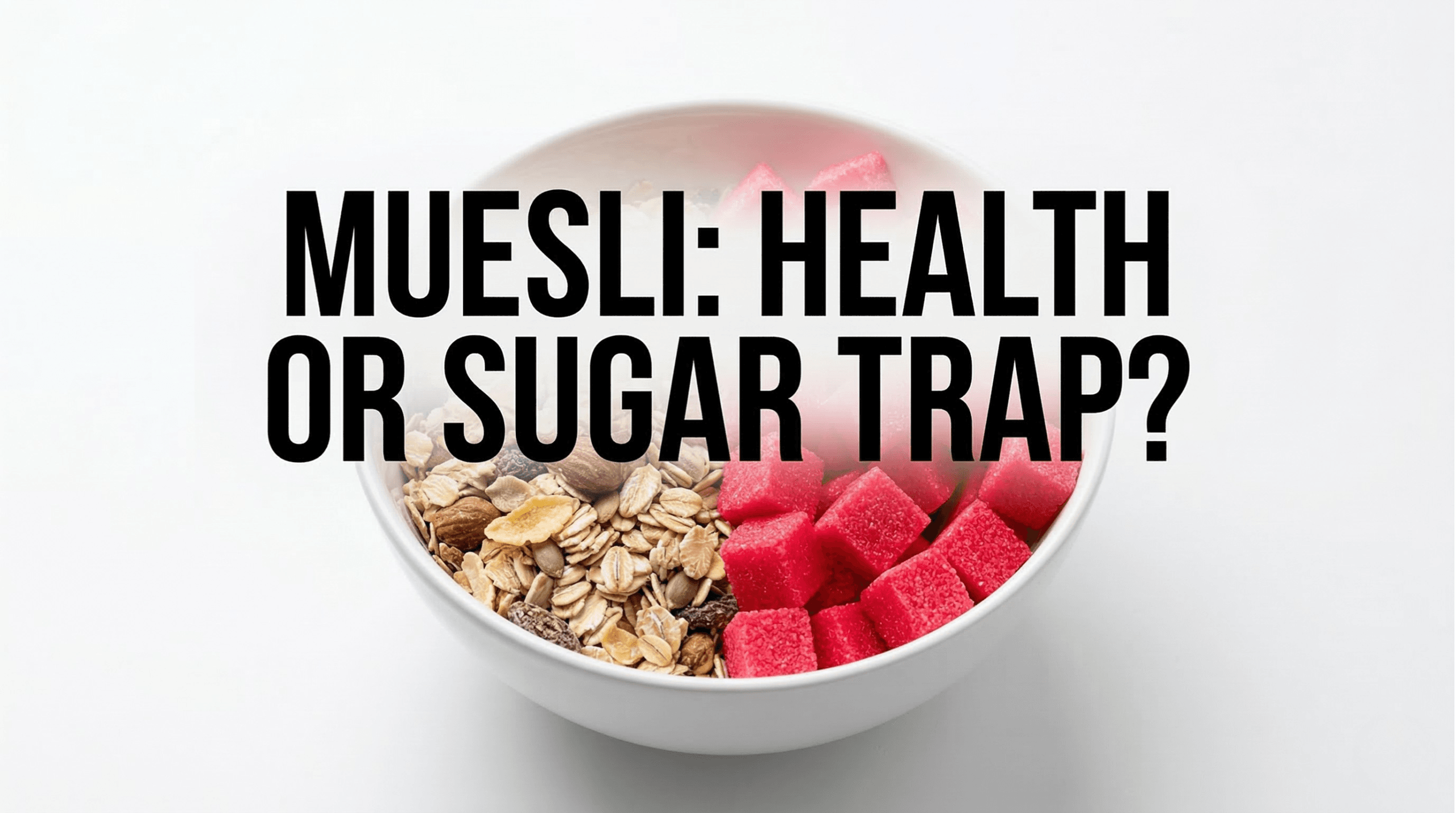
Wondering is muesli good for weight loss? I tracked my daily oat intake for six months. The results destroyed everything I thought I knew about breakfast.
I sat in a tiny, fog-streaked café off the Bahnhofstrasse in Zurich, Switzerland, stabbing a silver spoon into a heavy ceramic bowl. Cold milk pooled around sad, wilted oats and bruised raisins. Everyone asks, is muesli good for weight loss, and back then, I firmly believed the colorful marketing hype.
But my favorite denim jeans felt like industrial tourniquets around my waist. My mental energy violently crashed by 11:00 AM every single morning. A complete disaster.
I had just spent three weeks inhaling this “miracle” Swiss health food by the trough. I gained six solid pounds of pure, stubborn flab around my midsection. Why? Because I fell for the oldest trick in the dietary playbook.
We trust the earthy packaging and the prominent green leaf logos staring back at us from the grocery aisle. We assume a cardboard box covered in pictures of pristine mountains equates to immediate fat loss. This assumption will actively destroy your metabolic health.
The texture was always phenomenal, mimicking a decadent dessert disguised as a responsible breakfast. I chewed through the dense, nutty clusters utterly unaware of the caloric payload I was swallowing. It felt like eating handfuls of wet gravel coated in thick molasses.
I needed to strip the illusion away and look at the raw science of this beloved cereal. I bought an Escali Primo P115C digital scale and started tracking every single gram that entered my kitchen. What I found made me throw three whole boxes directly into the trash can.
The Swiss Betrayal: Is Muesli Good For Weight Loss When Loaded With Hidden Calories?
Let’s look at the original creator, Dr. Maximilian Bircher-Benner. He invented this specific mixture in 1900 for hospital patients needing severe nutritional rehabilitation.
He wanted to cure chronic illnesses in a clinical setting, not help modern desk-jockeys drop a dress size. His original recipe was actually a massive, sour apple concoction. It contained a mere tablespoon of oats soaked overnight.
Modern food conglomerates completely hijacked his clinical vision. Brands like Alpen and Familia bastardized the formula with roasted clusters, vegetable oils, and refined syrups.
You pour a massive bowl before work, thinking you are healing your metabolism. Instead, you are mainlining enough raw carbohydrates to fuel an Olympic marathon runner.
The primary ingredient in most commercial blends is rolled oats, which are incredibly dense. One cup of raw oats packs roughly three hundred calories before you even add a drop of liquid. Adding dried fruit and nuts pushes that number into the stratosphere.
I was eating nearly eight hundred calories before 8:00 AM. My body had absolutely no reason to burn stored body fat. It was drowning in a constant influx of easy energy.
The Glycemic Index Trap
Blood sugar management dictates your ability to burn fat effectively throughout the day. When you eat a massive bowl of carbohydrates, your pancreas floods your system with insulin.
Insulin acts as a biochemical lock on your fat cells. While insulin levels remain high, your body physically cannot access stored fat for fuel. Pure biology.
Dried fruit, a staple in nearly every commercial mix, is essentially concentrated fruit sugar. The dehydration process strips away the water volume, leaving behind a dense sugar bomb. Chewing on dried cranberries sends your blood glucose spiking almost as fast as eating raw table sugar.
You end up white-knuckling your way to lunch, fighting off intense cravings for more carbohydrates. This vicious cycle ruins any caloric deficit you tried to establish.
The Portion Distortion Reality: Is Muesli Good For Weight Loss Without A Scale?
I pulled my Escali Primo P115C digital scale from the top cabinet one morning. The cold plastic felt heavy with judgment. I placed my favorite wide-brimmed bowl on the metal plate and hit the tare button.
I poured out what I considered a normal, healthy serving of my favorite Swiss blend. The bright red numbers flashed on the LCD screen violently. One hundred and forty grams.
A single, scientifically accurate serving of this commercial mix was supposed to be forty-five grams. I was eating triple the recommended amount in a single sitting. Pure caloric overload disguised as a light morning snack.
Forty-five grams looks absolutely pathetic sitting in a standard cereal bowl. It barely covers the bottom of the dish. Nobody naturally pours a forty-five-gram serving unless they are strictly measuring it out.
This is the exact moment I realized the inherent danger of “healthy” foods. If you do not weigh your dense carbohydrates, your perception of a normal portion will always be skewed. We eat with our eyes, and our eyes are terrible judges of caloric density.

Anatomy of a Fat-Burning Bowl
I refused to give up my morning routine entirely, so I decided to engineer a better version. I needed to strip away the industrial garbage and rebuild the meal from the ground up.
I threw out the pre-mixed boxes and went straight to the bulk bins at my local market. I bought plain Bob’s Red Mill Old Country Style Muesli as a bare-bones foundation. No added sugars, no roasted oils, just raw ingredients.
But raw ingredients alone do not solve the satiety problem. Just oats and seeds will leave your stomach growling fiercely within two hours. You need to anchor the carbohydrates with heavy, slow-digesting proteins.
I started mixing exactly thirty grams of the raw mix with a massive scoop of plain Greek yogurt. The thick, tart yogurt acted like a cement mixer in my stomach. It slowed down the digestion of the oats and prevented the aggressive insulin spike.
I completely eliminated the dried fruit from my pantry. Instead, I diced up a quarter of a fresh, crisp Granny Smith apple. The physical water weight of the fresh fruit provided the volume my eyes desperately needed to see.
The Hydration Protocol
You should never eat raw oats completely dry. They absorb liquid like microscopic sponges once they hit your digestive tract.
Eating them dry pulls water from your gut, causing severe bloating and sluggish digestion. You feel like you swallowed a brick that expands continuously throughout the morning. This physical discomfort often mimics hunger cues, leading to more accidental snacking.
I began soaking my thirty-gram portion in unsweetened almond milk the night before. This overnight process breaks down the complex starches and neutralizes the naturally occurring phytic acid. The oats swell to double their size, creating a massive, visually satisfying bowl.
Your brain sees a huge portion and immediately registers satisfaction before the first bite. You trick your visual hunger cues while keeping the actual caloric payload incredibly low. A brilliant physiological hack.
The 30-Day Metabolic Test
I stuck to this heavily modified, portion-controlled protocol for an entire month. No cheating, no estimating handfuls, just strict adherence to the kitchen scale.
The first three days felt like a physical withdrawal from my previous sugar-heavy breakfasts. My brain screamed for the dense, syrupy clusters I was used to chewing on. I drank black coffee to suppress the phantom cravings.
By day seven, a massive biological shift occurred. My energy levels stabilized completely, acting like a flat line on a heart monitor until late afternoon. The crushing 11:00 AM fatigue simply vanished from my daily routine.
I was no longer violently hungry heading into my lunch hour. The thick combination of Greek yogurt and soaked oats sat in my stomach like a heavy, comforting anchor.
I stepped on the bathroom scale exactly thirty days later. I had dropped four pounds of water weight and visible abdominal fat. The answer to the question, is muesli good for weight loss, suddenly became entirely conditional.
The Ingredient Swaps That Matter
If you want to replicate this, you must become ruthless about your add-ins. A handful of walnuts sounds incredibly healthy on paper. But that careless handful can easily inject two hundred unexpected calories into your morning.
Use chia seeds instead of heavy tree nuts for a massive fiber boost. They gel up in the liquid, adding incredible volume without the dense caloric penalty of almonds or pecans. Two teaspoons of chia seeds completely change the texture profile of the bowl.
Never add honey or maple syrup under any circumstances. Liquid sugar bypasses your chewing mechanisms and hits your liver almost instantly. It absolutely ruins the entire metabolic purpose of the meal.
The Final Verdict on the Swiss Breakfast
You cannot buy a flat stomach from a colorful cardboard box in the cereal aisle. The food industry actively designs these products to bypass your natural satiety signals. They want you to pour a massive bowl, run out of the product quickly, and buy another box.
If you eat commercial blends blindly, you will gain weight rapidly and feel miserable. You will be riding a chaotic rollercoaster of blood sugar spikes and intense hunger crashes.
But if you strip it down to raw ingredients, weigh it precisely, and anchor it with heavy protein, everything changes. It becomes a highly efficient, slow-burning fuel source for your morning. You take total control away from the food manufacturers.
The magic is never in the food itself. The magic lies entirely in the mechanical execution of the portion sizes.